

Google just changed how potential clients discover your salon. The new “Know Before You Go” feature surfaces AI-generated tips before people visit your business.
These tips answer questions clients have before they book. Where should I park? Do they take walk-ins? What’s the best service to try first?
Google pulls these answers from your website, reviews, and social media. If your information is clear and current, you win. If it’s vague or outdated, you lose to competitors.
This isn’t just another Maps update. It’s a fundamental shift in how Google decides which businesses to recommend. And your website just became the most important piece of the puzzle.
What “Know Before You Go” Actually Does
Google’s new feature gives potential clients insider tips before they arrive. It’s like having a friend who’s already been there to guide you through your business.
The AI scans your digital presence and creates helpful suggestions. These appear right in Maps when someone is considering your salon.
How the AI Generates Tips
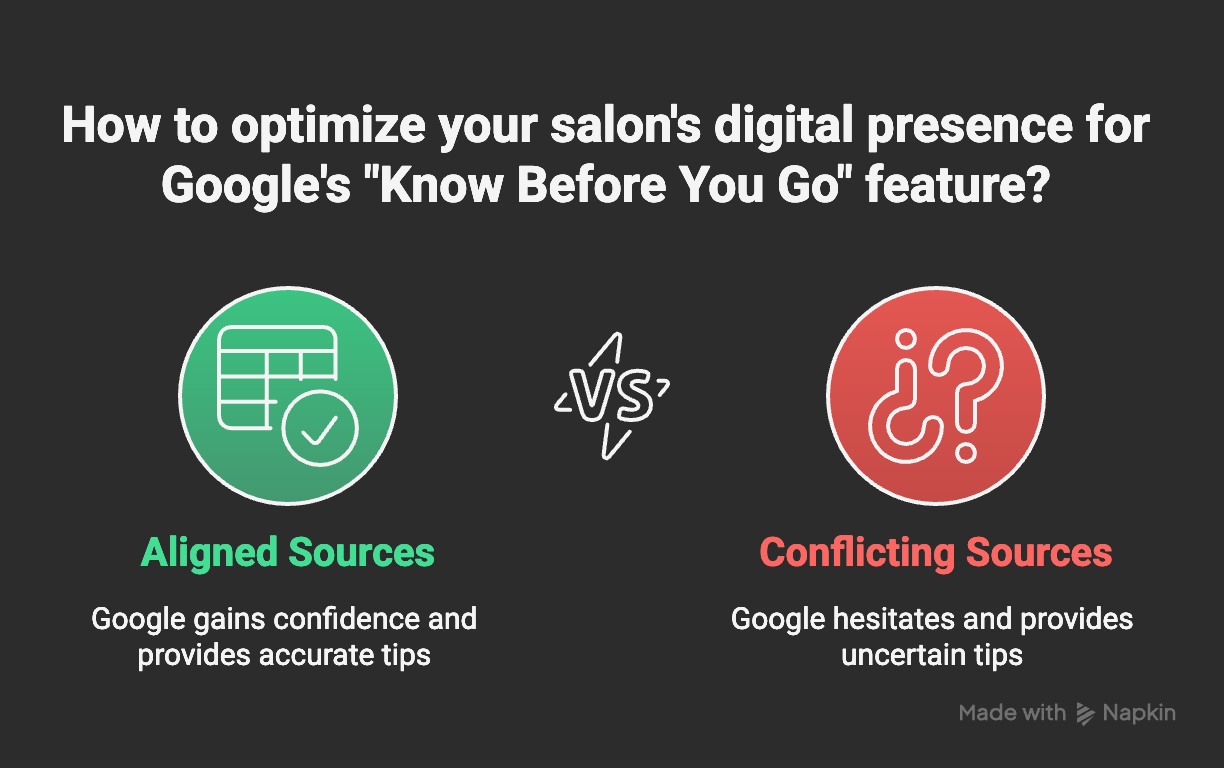
Google looks at three main sources. Your website gives it official information about services and policies. Your Google Business Profile confirms hours and basic details. Your reviews provide real-world language about what clients actually experience.
When these sources align, Google gains confidence. It knows the information is accurate because multiple sources say the same thing.
When they conflict, Google hesitates. Conflicting details make the AI uncertain about what’s actually true.
Why Salons Benefit Most
Salon clients want specifics before they commit. They’re trusting you with their appearance, so they do research.
They want to know if you specialize in their hair type. They need parking details because downtown lots confuse them. They want proof you can deliver the color they’re imagining.
“Know Before You Go” puts these answers where clients already look. If your answers are strong, you convert more browsers into bookings.
What Google Needs From Your Website
Your website is now Google’s primary reference source. The AI trusts structured, clear information from your own domain more than scattered social posts.
This means your website content directly impacts whether Google recommends you. Every page matters now.
Spell Out Your Services
Don’t assume Google understands salon terminology. Write out complete service descriptions with specific details.
Instead of just “Color Services,” explain what that means. Are you doing balayage? Highlights? Full color corrections?
Each service should have its own section with clear language. Describe what it is, how long it takes, and what clients should expect.
Google’s AI reads this and understands what you actually do. When someone searches for “balayage near me,” Google knows you offer that service because you spelled it out.
Keep Business Info Current
Your hours, pricing tiers, and policies need to be accurate everywhere. Google checks your website against your Business Profile and social media.
Mismatches confuse the AI. If your website says you close at 7 but your profile says 8, Google doesn’t know which is correct.
Update policy changes on your website first. Then update your profile. Keep everything aligned so Google can trust your information.
Make Policies Crystal Clear
Cancellation policies confuse potential clients. Deposit requirements make them nervous. Unclear policies cost you bookings.
Write these out in simple terms on your website. No legal jargon or confusing conditions.
“We require 24-hour notice for cancellations. Same-day cancellations forfeit your deposit. We get it—life happens. Just let us know as soon as you can.”
That’s clear. Google can use that. Potential clients can understand it before they book.
The Social Media Connection
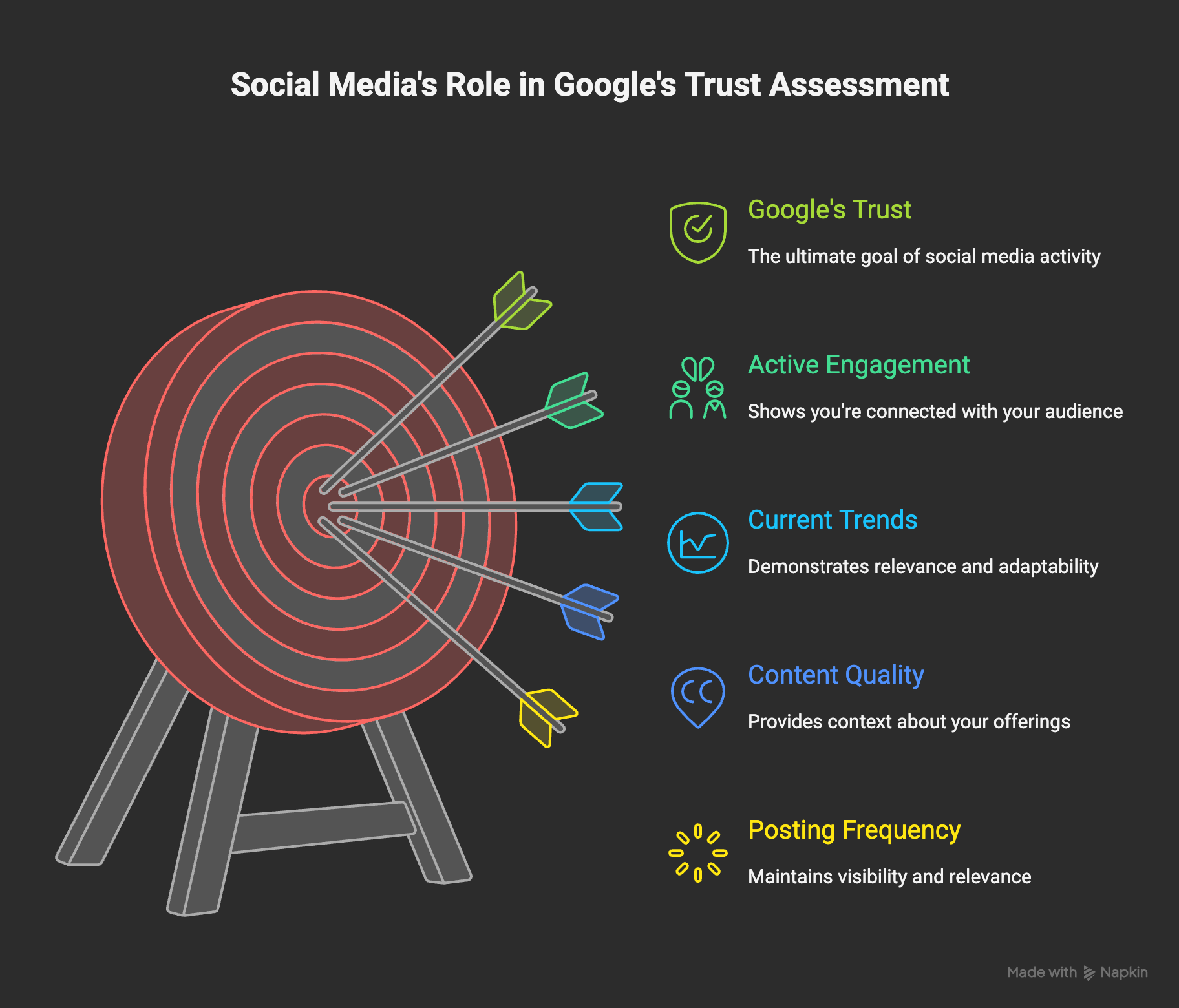
Google doesn’t just read your website. It scans your social media for current, active proof that you’re still thriving.
Your social presence tells Google whether you’re engaged with clients and current with trends.
Why Your Last Post Matters
If your most recent Instagram post is from 2023 announcing “We joined Instagram!”, Google sees a dead account. Dead accounts suggest a struggling business.
Active social media shows Google you’re current. You’re posting new work, responding to trends, and engaging with clients.
Post at least weekly. Show recent work, highlight client transformations, or share behind-the-scenes content.
Google’s AI interprets social activity as a trust signal. Active businesses get recommended. Silent businesses get skipped.
What Content Google Values
Not all posts carry equal weight. Google looks for content that shows what you’re currently offering.
New service announcements tell Google you expanded your capabilities. Menu updates reveal current pricing. Event posts show you’re active in your community.
Before-and-after photos prove your skill level. Client shout-outs demonstrate satisfaction. Promotional offers show you’re competitive.
Each post gives Google more context about who you are and what you do well. More context means better recommendations.
Reviews Are Your Secret Weapon
Reviews have always mattered for local search. Now they’re feeding AI-generated tips directly to potential clients.
The difference is what those reviews actually say. Generic praise doesn’t help. Specific details do.
The Wrong Way to Ask
Most salons send a generic “Please leave us a review!” message. This gets generic results.
“Great service! Highly recommend!” tells Google nothing. What service? What made it great? What should future clients expect?
These reviews pad your star rating but don’t help Google understand what you’re good at.
The Right Way to Ask
Ask clients to mention specific services or experiences. Guide them toward helpful details without being pushy.
“If you loved your balayage today, we’d appreciate a review mentioning what you loved about the color! It helps other clients know what to expect.”
Now you’re getting reviews that say “The balayage was exactly what I wanted—natural dimension with low maintenance. Sarah listened to my lifestyle needs and created a perfect color.”
That review teaches Google that you specialize in balayage. It teaches potential clients what to expect. It includes natural keywords Google uses for ranking.
A Simple Review Prompt That Works
Text your clients 2-3 hours after their appointment. Don’t wait days—ask while the experience is fresh.
“Hey [Name]! Hope you’re loving your new look. If you have 60 seconds, we’d appreciate a review mentioning what you loved about your [specific service] today. It helps other clients know what to expect. Here’s the link: [short link]”
That’s specific. It reminds them of what they got. It suggests what to mention without forcing it.
When Salon Afton implemented this system, they grew from 154 reviews to 988 in 24 months using a proven review generation approach. Those reviews helped them rank #1 across 88% of their local search area.
Why Your Website Suddenly Became Critical
Your website used to be a nice-to-have. Now it’s essential infrastructure for Google’s AI systems.
The quality of your site directly impacts whether Google recommends you to potential clients.
Speed and Structure Matter
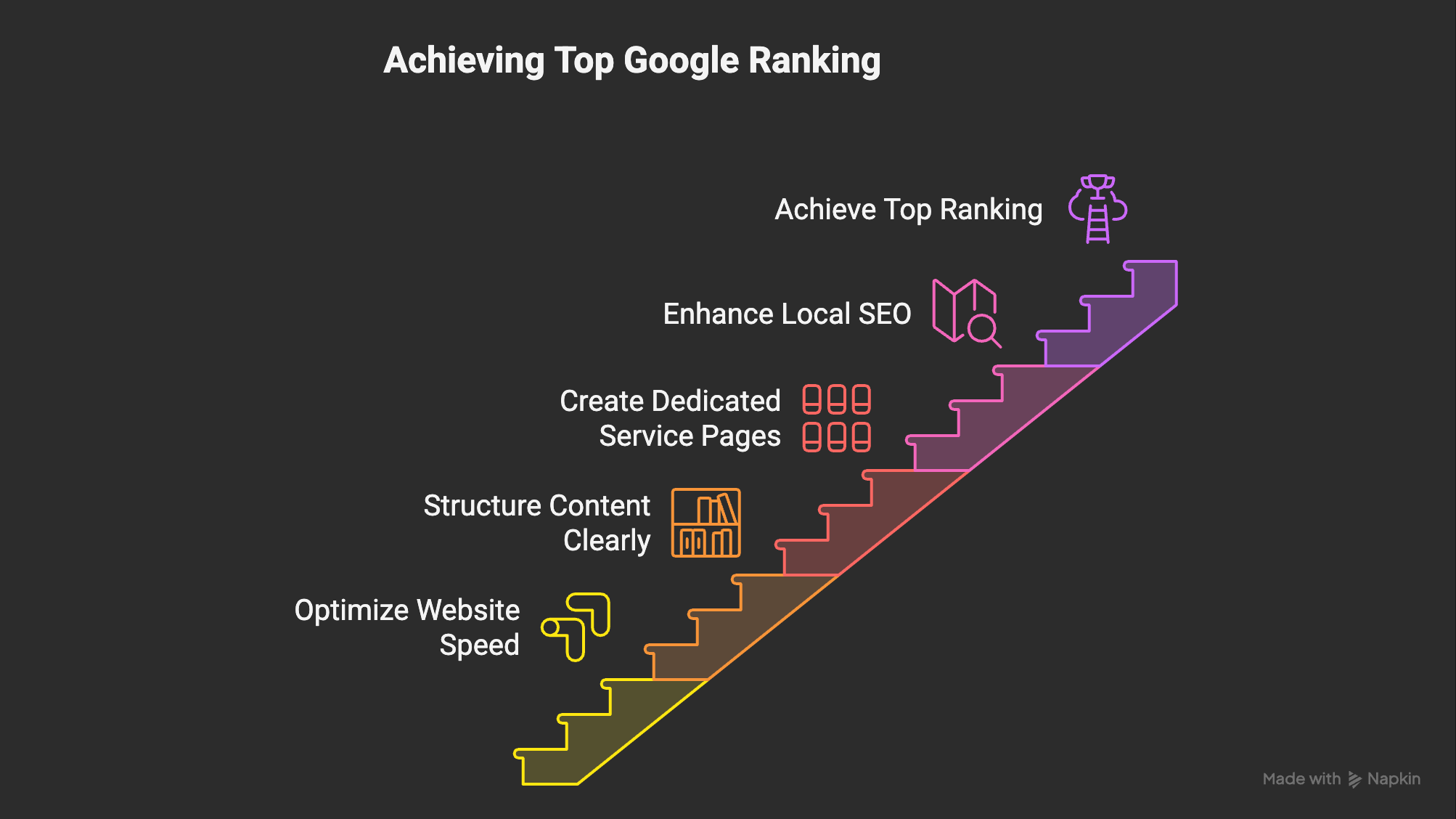
Google’s AI needs clean, fast-loading pages it can scan quickly. Bloated WordPress sites with 40 plugins confuse the crawler.
Fast sites with clear structure help Google understand your business instantly. Slow sites get skipped because the AI can’t process messy code efficiently. If your site is lagging, here’s how to fix your slow website.
Your site also drives your local SEO. Fast, well-structured pages give Google clear context it can rank. Google’s ranking formula rewards profiles and websites that stay active and current.
Dedicated service pages help you show up for high-intent searches. Speed and structure together turn interest into action.
Service Pages That Rank
Create individual pages for each major service category. Don’t stuff everything into one “Services” page.
A dedicated “Balayage & Highlights” page ranks for those searches. A “Color Correction” page ranks for color correction searches.
Each page should explain the service, show examples, list pricing tiers, and set expectations. This gives Google complete context about that specific offering.
When someone searches “balayage salon near me,” Google can point directly to your balayage page. That precision increases your chances of ranking first.
The Bigger Picture: AI Is Rewriting Local Search
“Know Before You Go” is just one piece. Google is rebuilding Maps around AI-generated insights.
They replaced the Q&A section with Ask Maps. They’re generating business descriptions automatically. They’re creating tips before visits.
All of this relies on one thing: trustworthy, structured data about your business. If you control that data, you control how Google represents you.
What This Means for You
Every detail you publish online now feeds Google’s AI. Your website content becomes Maps tips. Your reviews become AI-generated descriptions. Your social posts prove you’re active.
The salons that win are the ones providing clear, consistent, current information everywhere. The salons that lose are hoping their great work will somehow magically show up in search results.
Making This Manageable with pHara AI
This sounds like a lot of work. You’re not wrong. Maintaining your website, staying active on social media, and generating optimized reviews takes time you don’t have.
The alternative is losing clients to salons that do keep up. Salons with strong digital presence are dominating local search. The gap is widening.
If you’re thinking, “I need help with all of this,” you’re not alone. Most salon owners are phenomenal at their craft and overwhelmed by digital marketing.
We built pHara specifically for this problem. It’s an AI system that helps you keep everything up to date without the technical headache.
Simple text messages update your website. Automated systems generate reviews. Your digital presence stays fresh while you focus on doing hair.
Curious how this could work for your salon? We’d be happy to show you. No hard sell, just an honest conversation about what’s possible when your digital presence finally matches your skills behind the chair.
See how “Know Before You Go” becomes “Book Before You Blink.”


